A fivem car dealership is one of the first things players touch on a serious roleplay server, so it pays to get it right. Whether you run ESX, QBCore or Qbox, the dealership is where money meets the garage system: it hands out keys, writes ownership to the database and feeds the rest of your vehicle economy. This guide walks the moving parts so you can pick or build one that fits your server.
NPC Dealership vs Player-Owned Dealership
There are two broad models, and most servers run both side by side. An NPC dealership is the baseline: a fixed marker or ped where any player can buy stock vehicles at set prices, paid from cash or bank. It is simple, always open, and good for the entry-level cars everyone needs.
A player-owned or player-run dealership flips that around. A character (or a gang or business) owns the lot, sets their own prices, stocks their own inventory and keeps the profit. This is heavier to operate but it creates real jobs, real margins and a reason for players to log in. Many owners gate the high-end and imported vehicles behind player dealers while keeping cheap commuter cars on the NPC lot.
The Showroom: An MLO With Display Vehicles and a Clean Preview UI
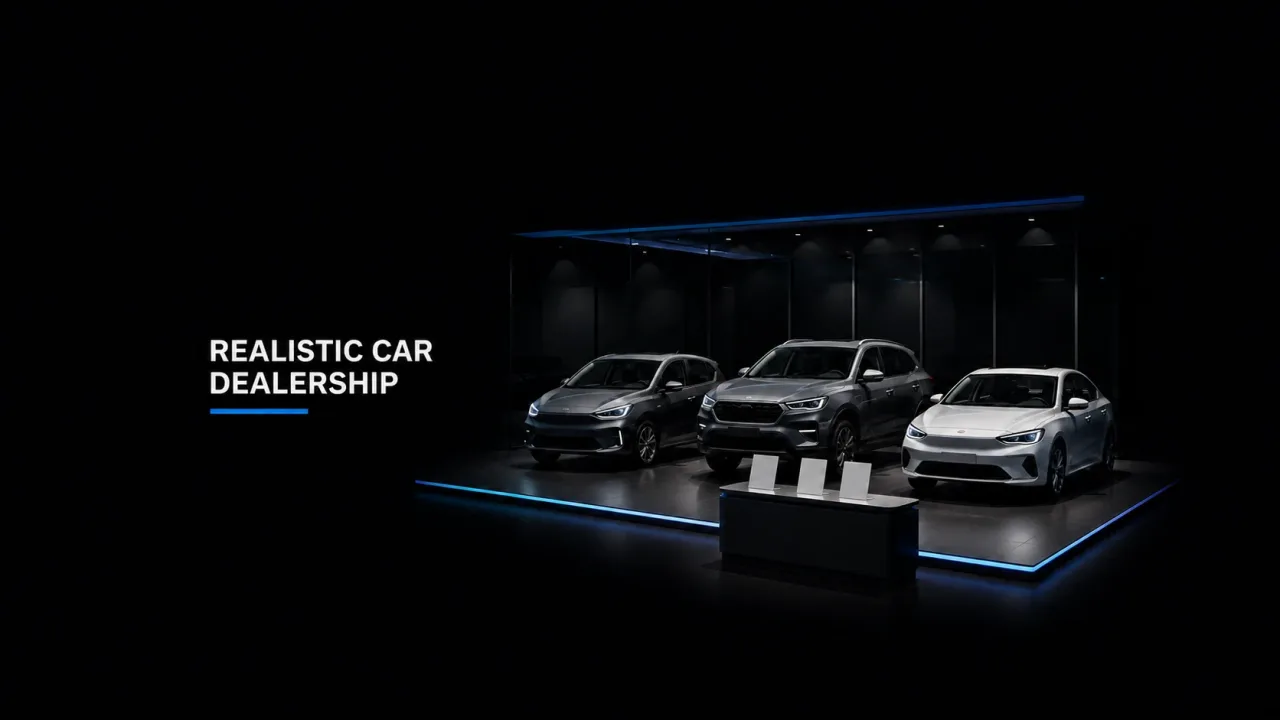
The showroom is the storefront. A dedicated dealership MLO gives you a physical space players walk into, with spawn points for display vehicles on the floor. The best setups pair that interior with a clean browse UI: a category list, thumbnails, price, and the core stats (top speed, acceleration, braking, handling) pulled from your vehicle data.
Preview is where players make up their minds, so make it smooth:
- Spawn the previewed vehicle on a fixed pad, not in traffic, and clean it up when the menu closes.
- Let players orbit the camera and change primary/secondary colors before buying.
- Filter by class and price so a 200-car catalog stays navigable.
Test-Drive Mechanics
A test drive lets a player feel the car before spending. The reliable pattern is timed, geofenced and self-cleaning. Spawn a temporary vehicle the player cannot keep, start a countdown (60-120 seconds is typical), and draw a soft boundary around the dealership area.
When the timer ends or the player leaves the zone, teleport them back to the spawn point and delete the test vehicle. Mark it as a temp entity so no keys are issued and it never reaches the garage. This keeps test drives from becoming a free-car exploit.
Purchase Flow: Garages, Keys and Persistent Ownership
The purchase is the part that has to be airtight, because it writes to your economy. A clean flow looks like this:
- Player confirms the vehicle and chosen colors in the UI.
- The server checks funds, deducts the price, and generates a unique plate.
- An owned-vehicle row is inserted (owner identifier, model, plate, mods, stored state) into your
owned_vehiclestable.
- Keys are granted and the car is parked in the player’s garage, ready to retrieve.
Persistence is the whole point: the vehicle survives relogs and restarts because ownership lives in the database, not in the world. If your dealership and garage share that table and plate scheme, retrieval and storage just work.
Financing and Player-to-Player Used Cars
Financing turns a one-off purchase into ongoing gameplay. A payment plan takes a down payment, then debits installments on a schedule; miss enough payments and the vehicle can be repossessed back to the dealership. Keep the math server-side and store the remaining balance per vehicle so it cannot be edited client-side.
A used-car market is where the economy gets interesting. Let players list owned vehicles for sale to others, transfer ownership and keys on a completed sale, and take a small dealership or tax cut. This drains money from the system, gives older cars residual value, and turns a static price list into a living market.
The Dealership Job: Commission and a Boss Menu
If you run player dealers, treat the dealership like any other job. Employees clock in, sell vehicles and earn a commission percentage on each sale. A boss menu handles the management side:
- Hire, fire and set employee ranks and commission rates.
- Manage stock and pricing for the lot’s inventory.
- View the society balance and withdraw or deposit funds.
Routing sales through a society account (rather than personal cash) keeps the business books clean and makes the lot a real economic entity.
Anti-Exploit, Catalog Balance and Integration
Validate everything server-side. The client should send an intent (“buy this model”), never the price or the final vehicle entity. The server looks up the authoritative price, confirms the player can afford it, and only then spawns and registers the car. This single rule blocks the two classic exploits: client-supplied prices and vehicle duplication.
Balance matters as much as security. Audit your catalog by class so the fleet stays sane: price super and sports cars high enough that they are goals, keep commuter cars cheap, and make sure add-on vehicles are not undercutting the economy.
For deeper systems, a player-run business layer like https://store-tebex.io pairs naturally with a player-owned dealership economy, while dealership and garage scripts at https://scripts-tebex.io handle the persistence and key logic. If you need the physical lot, a showroom MLO from https://assets-tebex.io drops the interior and display pads into place.
A good dealership is not just a buy menu; it is the entry point to your vehicle economy. Get the showroom, the server-validated purchase and the garage handoff right first, then layer financing, a used-car market and a dealership job on top. Built carefully, it turns cars into an ongoing, player-driven part of your server.